Every child learns, grows and experiences the world differently. For parents of children with additional needs, choosing the right childcare centre often comes with important questions. Will my child feel comfortable? Will educators understand their needs? Will they have opportunities to learn and play with other children?
Inclusive childcare focuses on understanding each child’s abilities, interests and individual support needs. For families looking for a childcare centre in High Wycombe, knowing how educators support different learning needs can make choosing early education easier.
Understanding Additional Needs in Early Childhood Education
Children may require additional support for different reasons, including developmental delays, autism, communication difficulties, physical disabilities or sensory differences.
Every child has unique strengths and interests. Inclusive early childhood education recognises these differences and creates opportunities for children to participate in meaningful learning experiences at their own pace.
Why Inclusive Childcare Matters for Every Child
Inclusive childcare helps children develop confidence, friendships and a sense of belonging.
Through shared play, group activities and positive interactions, children learn to communicate, cooperate and appreciate individual differences.
A supportive environment allows children with different abilities to participate in everyday experiences while receiving appropriate encouragement and assistance.
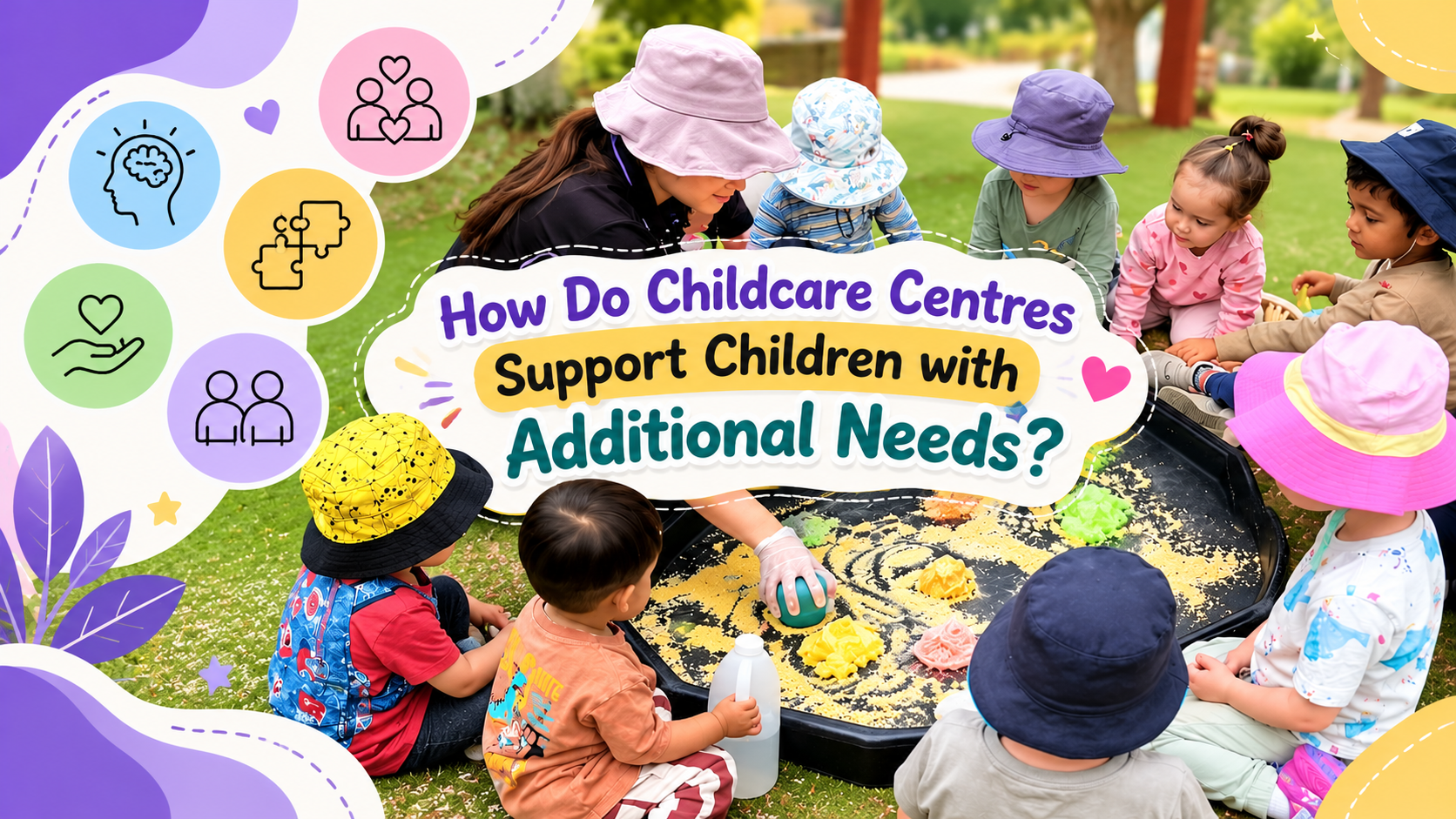
How Do Childcare Educators Support Children with Additional Needs?
Educators play an important role in creating welcoming and flexible learning environments.
They may support children through:
- Individualised learning: Adapting activities to suit different abilities and developmental needs.
- Communication support: Using visual cues, gestures and simple instructions where helpful.
- Emotional wellbeing: Providing reassurance, predictable routines and positive relationships.
- Inclusive play: Encouraging participation in creative, sensory and outdoor activities.
- Accessible environments: Considering physical access, sensory preferences and suitable learning materials.
These approaches help children participate in learning while building confidence and independence.
How Does the Australian Early Years Learning Framework Support Inclusion?
Australia’s Early Years Learning Framework (EYLF V2.0) recognises children as capable learners with different strengths, experiences and ways of learning.
The National Quality Framework (NQF) also promotes quality early childhood education, supportive relationships and meaningful family partnerships.
Together, these frameworks help guide inclusive learning practices where children are respected, supported and encouraged to participate.
What Australian Government Support Is Available?
The Australian Government provides resources to help eligible childcare services support children with additional needs.
The Inclusion Support Program (ISP) helps eligible services improve access and participation through professional guidance, resources and certain funding arrangements.
Families may also explore the NDIS early childhood approach for information about developmental concerns, disability-related supports and available services.
Eligibility and support arrangements depend on individual circumstances.
Inclusive Early Learning at Jacaranda Childcare Centre
At Jacaranda Childcare Centre High Wycombe , nurturing relationships, play-based learning and children’s individual development are important parts of the early learning approach.
Located in High Wycombe, Western Australia, Jacaranda provides opportunities for children to explore, build friendships and develop confidence through everyday learning experiences.
Families looking for childcare in High Wycombe can speak with the Jacaranda team about their child’s individual needs and discuss what support may be appropriate and available.
Frequently Asked Questions
1. Can Children with Additional Needs Attend a Mainstream Childcare Centre?
Yes. Children with additional needs can attend mainstream childcare services. Centres should consider relevant inclusion responsibilities and reasonable adjustments for children with disability.
2. Does My Child Need a Formal Diagnosis to Receive Support?
Not always. Some inclusion and early childhood supports may be available without a formal diagnosis, depending on the program and individual circumstances.
3. How Can Parents Find an Inclusive Childcare Centre?
Parents can ask about educator experience, communication practices, individual learning support and accessibility when visiting a childcare centre.
Supporting Every Child’s Early Learning Journey
Every child deserves opportunities to feel valued, included and supported. Inclusive childcare helps create learning environments where children can build confidence, develop relationships and explore their abilities.
If you’re exploring an early learning centre in High Wycombe, visit Jacaranda Childcare Centre to learn more about its early learning approach and discuss your child’s individual needs.