Choosing the right childcare centre is an important decision for every family. Parents today are looking beyond basic care and are increasingly interested in learning opportunities, child safety, inclusion, wellbeing and how a centre supports their child’s individual development.
The Australian early childhood education and care (ECEC) sector is also evolving. In 2026, families are seeing greater attention on child safety, inclusion, educator quality, access to subsidised care and meaningful early learning experiences.
For families searching for childcare in High Wycombe, understanding these trends can make it easier to know what to look for when choosing an early learning environment.
1. Greater Focus on Child Safety and Wellbeing
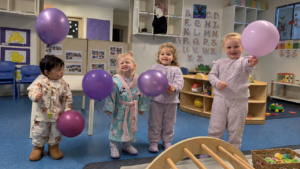
Child safety has become one of the most important priorities across Australian early childhood education.
In 2026, Australia has introduced and progressed several measures designed to strengthen child safety in ECEC. These include a National Early Childhood Worker Register, mandatory child safety training and stronger requirements around safeguarding and supervision.
For parents, this means asking questions about how a childcare centre:
- Protects children’s safety and wellbeing
- Trains and supports educators
- Manages visitors and secure access
- Handles child protection concerns
- Supervises children during indoor and outdoor activities
- Communicates important information with families
A safe environment gives children the confidence to explore, play and learn.
2. Inclusive Childcare for Every Child
Another important trend is the growing focus on inclusion in early childhood education.
Inclusion means creating an environment where every child can participate meaningfully and experience positive outcomes, regardless of their abilities, learning styles, cultural background, language or individual circumstances.
In September 2026, the Australian Government introduced an Inclusion Ready Toolkit to help ECEC services strengthen inclusive practices and create environments where children can access, participate in and benefit from early learning.
Parents can therefore look for a daycare in High Wycombe that understands that every child develops differently and provides opportunities for children to learn at their own pace.
3. Play-Based Learning Continues to Matter
Children learn naturally through play, exploration and hands-on experiences. This is why play-based learning continues to be an important part of quality early childhood education.
Rather than expecting young children to sit and learn in a traditional classroom-style environment, educators can introduce learning through:
- Creative activities
- Sensory play
- Outdoor exploration
- Storytelling
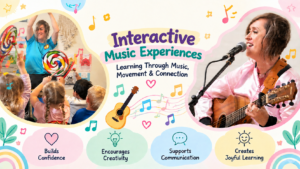
- Music and movement
- Construction and problem-solving
- Pretend and imaginative play
- Group experiences
These activities can support children’s language, social, emotional, cognitive and physical development.
For parents comparing early learning centres in High Wycombe, it can be useful to ask how learning is incorporated into everyday play.
4. More Attention to Children’s Individual Needs
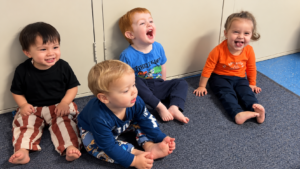
Every child is different. Some children may be confident in social situations, while others may need more time to become comfortable in a new environment.
Modern early childhood education increasingly recognises the importance of responding to children’s individual interests, strengths and developmental needs.
A quality early learning environment should give educators opportunities to observe children, understand what interests them and plan experiences that encourage further learning.
Parents can ask:
Does the centre recognise my child’s individual interests?
How do educators communicate my child’s progress?
How are learning experiences planned?
These questions can help families understand whether a daycare centre is focused only on supervision or also on children’s development and learning.
5. Stronger Connections Between Families and Educators
Parents want to know what happens during their child’s day. As a result, communication between families and educators has become increasingly important.
A positive relationship between parents and educators can help create consistency between home and childcare.
Families may receive updates about:
- Children’s activities
- Learning experiences
- Meals and routines
- Social interactions
- Developmental progress
- Special events
- Important daily information
Good communication also gives parents an opportunity to share information about their child’s interests, routines and changing needs.
For families considering childcare near High Wycombe, it is worth looking for a centre where communication with families is treated as an important part of the childcare experience.
6. Outdoor Learning and Exploration
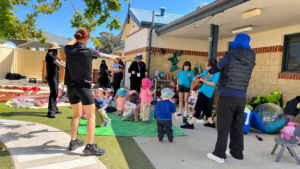
Outdoor play continues to be an important part of children’s early learning.
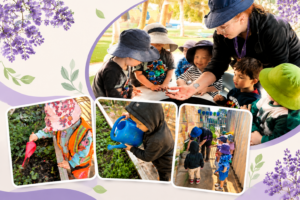
Outdoor environments give children opportunities to move their bodies, explore their surroundings and experience different types of play.
Simple experiences such as running, climbing, gardening, observing nature or playing with natural materials can support physical development, curiosity and problem-solving.
Outdoor learning can also provide opportunities for children to develop independence. Instead of simply being told about the world around them, children can experience it directly.
This is particularly valuable when looking for an early learning centre that provides a balance between indoor activities and outdoor exploration.
7. Child Care Affordability and the 3 Day Guarantee
Cost is naturally an important consideration for Australian families.
From 5 January 2026, all CCS-eligible families became eligible for at least 72 hours of subsidised care per fortnight, with some families eligible for up to 100 hours depending on their circumstances. This is part of the Australian Government’s 3 Day Guarantee.
The latest government data also shows that more than 1.4 million children attended Child Care Subsidy-approved care in the June quarter of 2026.
Parents should check their own eligibility and circumstances when considering childcare costs rather than assuming every family will receive the same subsidy.
8. Qualified and Supported Educators
Educators have a major influence on children’s experiences in childcare.
Parents are increasingly interested in knowing who will be caring for their children, what qualifications educators have and how staff are supported.
The Australian Government is continuing to strengthen workforce requirements, including the National Early Childhood Worker Register, which brings together information such as qualifications and relevant checks.
When visiting a childcare centre in High Wycombe, parents can consider:
- Educator qualifications and experience
- Staff-child interactions
- How educators respond to children
- Staff communication with families
- Whether children appear comfortable and engaged
The quality of relationships between educators and children is an important part of the early learning experience.
9. Technology With a Strong Focus on Privacy and Safety
Technology can be useful in childcare for communication, documentation and administration, but children’s privacy and safety remain important considerations.
Australian ECEC settings have introduced stronger expectations around the use of personal devices and the taking, storing and sharing of children’s images and videos. Parents may want to ask a childcare provider:
- How are children’s photos stored?
- Who can access them?
- How does the centre obtain permissions?
- What policies are in place for personal devices?
Technology should support communication and learning without compromising children’s privacy.
10. Preparing Children for School Through Everyday Learning
Another important trend is recognising that school readiness is about more than knowing letters and numbers.
Children can develop school-ready skills through everyday experiences such as:
- Following simple routines
- Communicating with others
- Taking turns
- Solving problems
- Making choices
- Managing emotions
- Developing independence
- Listening and participating in group experiences
These skills can help children transition confidently into their next stage of education.
A strong preschool and early learning program can provide opportunities for children to develop these abilities through meaningful, age-appropriate experiences.
Conclusion
The latest childcare trends show that parents are looking for more than just a place where their children can spend the day. Safety, inclusion, play-based learning, outdoor experiences, qualified educators, strong family communication and individualised support are becoming increasingly important when choosing an early learning environment.
At Jacaranda Childcare Centre in high wycombe, creating meaningful experiences through play, creativity, exploration and positive relationships can help children develop important skills for their early years and beyond. By understanding current childcare trends and knowing what to look for, parents can make a confident and informed choice for their child’s early learning journey.
Frequently Asked Questions
- What is the biggest childcare trend in 2026?
Child safety and wellbeing remain major priorities, alongside stronger attention to inclusion, quality early learning and educator standards. - Why is play-based learning important in childcare?
Play gives children opportunities to explore, communicate, solve problems, make choices and develop skills naturally through meaningful experiences. - What does inclusive childcare mean?
Inclusive childcare means creating an environment where every child can access, participate meaningfully and experience positive outcomes from early learning. - What should parents ask when visiting a childcare centre?
Parents can ask about educator qualifications, safety procedures, learning programs, outdoor activities, inclusion, communication with families and how children’s individual needs are supported. - Has childcare subsidy changed in Australia in 2026?
Yes. From 5 January 2026, all CCS-eligible families became eligible for at least 72 hours of subsidised care per fortnight under the 3 Day Guarantee, subject to eligibility requirements.