Creative play gives children the freedom to explore ideas, express themselves and learn through hands-on experiences. Activities such as painting, drawing and collaborative art allow children to experiment with colours, textures and movement while developing important skills.
At Jacaranda Childcare Centre, creative experiences are part of children’s everyday learning. Through open-ended activities, children can make choices, work alongside their friends and express their creativity in ways that feel natural and enjoyable.
How Creative Play Supports Children’s Development
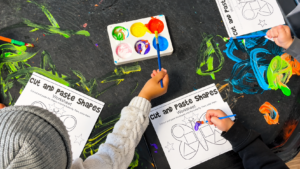
Creative activities are much more than making colourful artwork. They provide children with opportunities to develop cognitive, social, emotional and physical skills.
When children participate in painting activities, they can:
- Explore colours and different textures
- Develop hand-eye coordination
- Strengthen fine motor skills
- Express their ideas and imagination
- Build confidence through independent choices
- Practise sharing and cooperating with others
These simple experiences can become meaningful learning opportunities in an early childhood environment.
Encouraging Creativity Through Painting
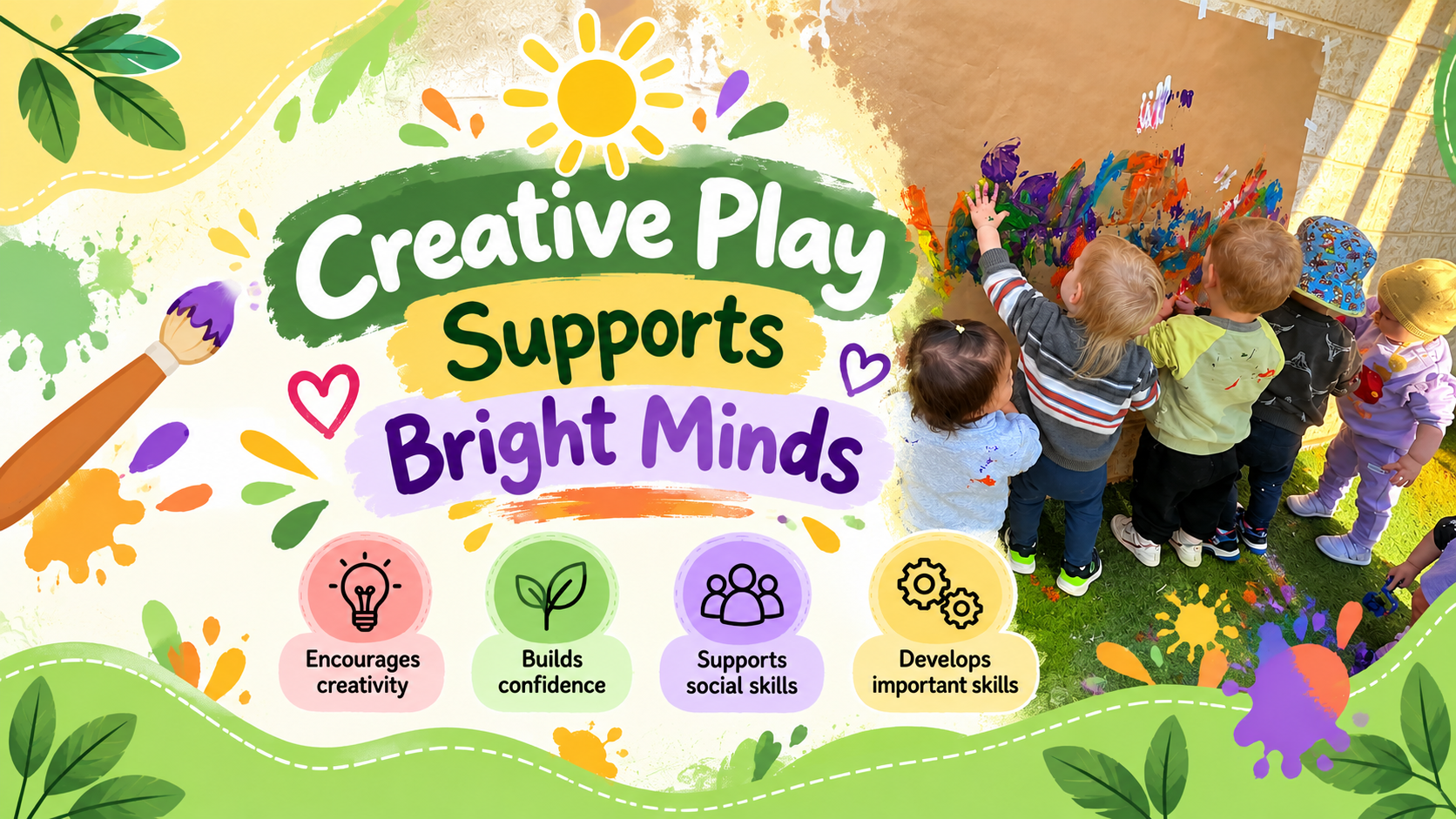
Painting is an open-ended activity that allows children to explore without needing to produce a particular result. They can choose colours, experiment with different brush movements and create their own patterns and designs.
In the featured activity, children work together on a large shared artwork. This gives them space to explore painting while also learning how to participate in a group experience.
There is no single “right” way to create. The process itself encourages curiosity, experimentation and self-expression.
Building Confidence Through Creative Experiences
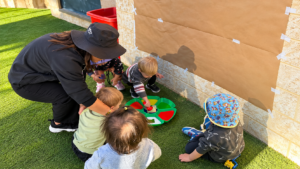
Creative play can help children become more confident in making decisions and sharing their ideas. Choosing a colour, deciding where to paint or trying a new technique gives children opportunities to make independent choices.
When educators encourage children to explore without focusing only on the finished product, children can feel proud of their efforts and become more willing to try something new.
In this Childcare Centre, educators provide supportive learning environments where children can explore creative activities at their own pace.
Learning to Work Together
Group creative activities also create opportunities for children to develop social skills. When several children work on the same artwork, they learn to share space and materials while observing what their friends are doing.
Through these experiences, children can practise:
- Cooperation
- Communication
- Turn-taking
- Sharing
- Listening to others
- Working towards a shared experience
These skills are valuable foundations for positive relationships and future learning.
Developing Fine Motor Skills
Creative activities can also support children’s physical development. Holding paintbrushes, making marks, reaching across a large painting area and controlling hand movements require coordination.
These actions help children practise fine motor control and hand-eye coordination, which can support everyday tasks as they grow.
Creative Play and Early Childhood Learning
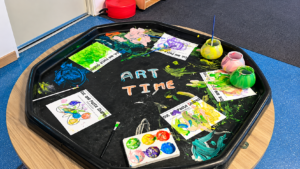
Early childhood learning does not happen only through structured lessons. Children can learn through exploration, play and everyday experiences.
Creative play allows children to investigate ideas while using their senses and imagination. It can also connect naturally with other areas of learning, including language, social development, problem-solving and physical skills.
For families looking for childcare in High Wycombe, experiences such as collaborative painting demonstrate how everyday activities can become opportunities for meaningful learning and development.
The Role of Educators in Creative Play
Educators play an important role in creating opportunities for children to explore their creativity. Rather than directing every step, educators can provide suitable materials, encourage children to experiment and give them the time and space to develop their own ideas.
A supportive educator can ask questions such as:
- “What colours would you like to use?”
- “What are you creating?”
- “What happens when you mix these colours?”
- “Would you like to try another brush?”
These conversations can encourage children to think, communicate and explain their ideas.
Creating Meaningful Learning Experiences at Jacaranda
At Jacaranda Childcare Centre, creative play can be incorporated into children’s learning through engaging, hands-on experiences. Activities such as group painting provide children with opportunities to explore, create and connect with others.
Every brushstroke, colour choice and shared moment can contribute to children’s development while allowing them to enjoy the simple experience of being creative.
Frequently Asked Questions
1. Why is creative play important for children?
Creative play gives children opportunities to express their ideas, use their imagination and learn through hands-on experiences. It can also support confidence, communication, coordination and social development.
2. How does painting support children’s development?
Painting allows children to experiment with colours, textures and movements. Holding brushes and making different marks can also help develop fine motor skills and hand-eye coordination.
3. Can creative activities help children build confidence?
Yes. Creative activities allow children to make choices and explore their own ideas. Completing an artwork or trying a new technique can give children a sense of achievement and encourage independence.
4. How does group art support social skills?
When children create artwork together, they practise sharing materials, taking turns, communicating and cooperating with their peers. These experiences can help children develop positive social relationships.
5. What can children learn through creative play?
Children can develop creativity, imagination, problem-solving, fine motor skills, communication and confidence through creative play. They can also explore colours, textures and different ways of expressing ideas.